Have you ever wondered how much of who you are, actually began with you?
I've been thinking a lot recently about the women who came before me. Their lives, their relationships, the choices they made, and perhaps more importantly, the choices they weren't able to make. And how some of those experiences might still be influencing me today.
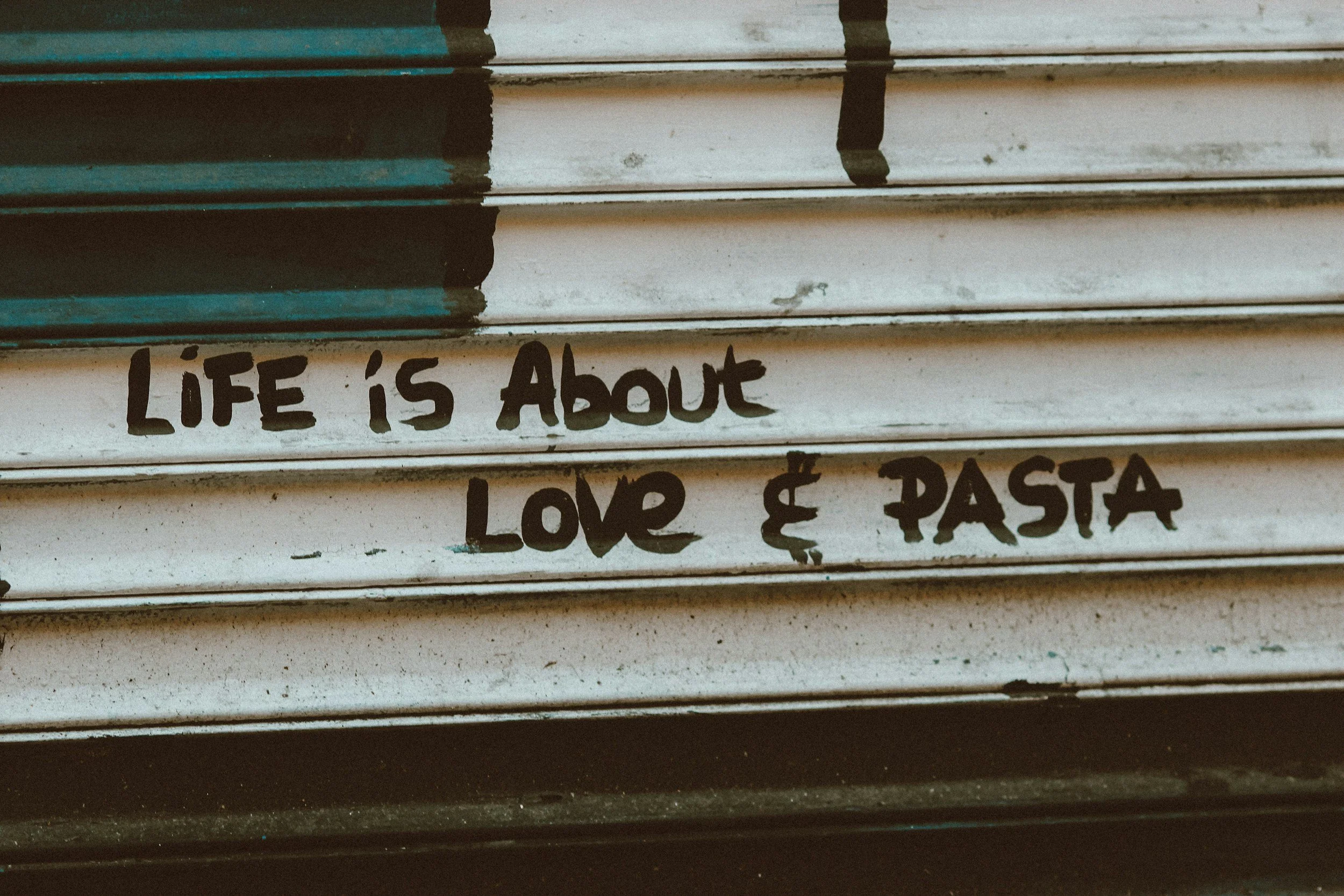
In my family, food has always been a big thing. I'm half Italian, so perhaps that's no great surprise! Food is love. It's comfort, connection and a way of bringing people together. But I've also recognised something in myself. This almost instinctive need to make sure everyone is happy, often using food to do it. “Come on in, sit down… have you eaten?” Almost as though happiness is something I can buy with a good meal. And it got me thinking…
Where does that come from?
The women who came before me:
My maternal grandmother was born in Naples, Italy, in the 1920s. She was the last daughter in a large family and lived through the Second World War. Her life was very different from mine.
She once told me about a boy she'd been in love with when she was young. But she wasn't able to marry him. Instead, her family arranged for her to marry a man she didn’t know. They were married by proxy, meaning she wasn't even physically alongside her husband when the marriage took place. My Grandfather (Nonno) was in England after the war had ended and my Grandmother (Nonna), still in Italy.
Just imagine that for a moment - Being in love with someone, perhaps imagining your future together, only to have that future decided for you. I don't know what she felt at the time. Whether she was frightened, angry, resigned or simply accepting of what was expected of her. Of course time and religion played a big part in that.
What I do know is that she went on to build a wonderful life with my Nonno, caring for him and raising a family.
My mum was born in Britain in the 1950s, to Italian parents – my Nonno and Nonna. And as she grew into a young woman, history, in some ways, began to repeat itself. My grandparents wanted to arrange a marriage for her, too. My mum remembers welcoming prospective families through the front door and promptly escaping out the back! I can almost picture it, and there's something quite wonderful about her determination.
But behind that story was a deeply painful time.
She didn't want the life that was being chosen for her. And when she eventually married my dad, an Englishman, it caused further unrest within the family. Those relationships were eventually repaired, but I think it's important to recognise that reconciliation doesn't necessarily erase the hurt that came before it. My mum had challenged an expectation that had shaped the lives of the women before her.
And doing something differently came at an emotional cost.
The invisible thread…
There's a particular memory of my Nonna that has stayed with me. When she told me about the boy she'd loved in Italy, she was incredibly emotional. And I think the timing of that conversation is significant… I was experiencing my own heartbreak. My trauma. Now, I don’t want to get into the muddiness of all of that because I’m many years on from it, but reflecting on patterns, I realise there is one; very soon after the birth of my second daughter, her father had left our relationship for another woman. I was navigating being a mother to a 6 year old and a newborn, while trying to make sense of a future that had suddenly changed beyond recognition. Then one day while we were chatting and she was trying to comfort me, there was my Nonna, sharing a part of her own story that I hadn't known before.
I remember feeling something change between us.
Until then, I'd known her as just my grandmother. But suddenly I was seeing the young woman she had once been. A woman who had loved someone, who had imagined a future, and whose life had taken a different direction. I don't know whether she recognised something of herself in my heartbreak. Perhaps my experience stirred memories of her own loss. Perhaps she simply wanted me to know that she understood. But I remember feeling a connection that hadn't been there before.
An invisible thread linking us.
Not simply as grandmother and granddaughter, but as two women who, despite living in entirely different worlds, perhaps understood something of each other's pain.
Now, many years later, it's made me wonder about all the other invisible threads within families. The ones we know about, and the ones we don't.
What is the motherline?
It’s a Jungian concept that explores the connections between generations of women. Not just through our ancestry, but through the stories, experiences, beliefs and patterns that shape our lives.
Our mothers were once little girls. So were their mothers. And so on.
Before becoming the women we knew, they had their own hopes, fears, disappointments, relationships and experiences. Of course, all of those things helped shape who they became.
Alongside this is the idea of intergenerational trauma: the ways in which the effects of difficult or traumatic experiences can influence subsequent generations. Don’t worry - this doesn't mean trauma is automatically passed down or that every behaviour we have can be traced back to a grandparent. But think about how much we learn within our families without anyone actually teaching us.
We learn how to express love.
How to respond to conflict.
Whether it's okay to disagree.
Whether our own needs matter.
Whether disappointing someone means risking their love or approval.
Sometimes these become such familiar ways of relating that we don't even question them and they're simply who we believe ourselves to be.
When keeping everyone happy becomes a way of life…
So, let’s come back to the food of it all.
I recognise in myself a desire to make others happy. To make sure everyone is comfortable, looked after and has everything they need. There's nothing wrong with that, of course. Caring for others is a wonderful thing. But now I’m curious about the difference between wanting to make someone happy and feeling responsible for their happiness.
Because those are two very different things!
My Nonna lived in a world where family duty and expectations had enormous influence over her choices.
My mother challenged those expectations, but experienced conflict and pain in doing so.
And I recognise in myself that sometimes keeping everyone happy can feel almost like an obligation.
Is there a connection? Perhaps. Perhaps not. But it's an interesting question.
From a psychodynamic perspective, we might explore how early relationships, family experiences and unspoken expectations influence our thoughts, feelings and behaviours later in life. We might start to gently think about some of the things we say about ourselves.
"I'm just a people pleaser."
"I've always been the strong one."
"I hate upsetting anyone."
"I feel guilty saying no."
But where did we learn these things?
Perhaps being agreeable once helped keep the peace. Perhaps putting others first was modelled by the people around us. Perhaps expressing our own needs didn't always feel comfortable or safe. So perhaps, over time, these ways of coping became part of our identity.
What might have helped one generation survive can sometimes become a pattern the next generation no longer needs.
There's something else I think is really important though, so stay with me…
Our motherline isn't simply about pain, hardship or trauma.
It's also about strength.
My Nonna lived through war. She became an immigrant, learned to live off the land in a country she didn't know, and navigated enormous change and expectations that shaped her life in ways I can barely imagine. Yet, through it all, she touched the lives of everyone lucky enough to know her. And boy, would she have fed you! She was an absolute powerhouse.
My mother found the courage to challenge some of the expectations placed upon her, even when doing so threatened her relationships with the people she loved. She wanted something different, and she was determined to make that happen. Now, here she is, married to that Englishman for over 50 years! Who, by the way, my grandparents grew to absolutely adore.
And then there's me… Well, I have the privilege of being able to look back, reflect and perhaps begin to make sense of those experiences in a way that the women before me, may never have had the opportunity to.
Perhaps courage travels through generations, too. Perhaps compassion does.
I think that deep desire to care for people, to gather everyone around a table, fill their plates and make them feel loved, is something rather beautiful that I've inherited and I wouldn't want to lose that. Not for a second.
But I am learning how to recognise the difference between caring for others because I want to and feeling responsible for their happiness because I'm afraid of letting them down. And that, right there, is where understanding becomes so valuable. Because maybe exploring our motherline isn't just about recognising what we've inherited. Perhaps it's also about discovering that we have a choice in what we carry forward.
Understanding without blame.
I think one of the most important parts of exploring our own history is learning to look back with curiosity rather than blame. Our mothers and grandmothers were shaped by their circumstances, just as we are. They have done the very best they could with the choices, knowledge and opportunities available to them. That doesn't mean their decisions couldn't have caused pain and it doesn't mean we have to minimise our own experiences.
Both things can be true. (Insert eye roll here)!
In counselling, we sometimes explore patterns that don't seem to make sense in the present.
Why do I feel so responsible for everyone?
Why is it difficult to put myself first?
Why do I fear abandonment?
Why does disagreement feel so uncomfortable?
Looking at our own experiences can help us understand these feelings and becoming curious about the generations before us can add another layer of understanding. Not to find someone to blame, rather to understand ourselves with a little more compassion.
Choosing what we carry forward.
When I think about that conversation with my Nonna now, I don't just think about heartbreak.
I think about connection.
About two women, separated by generations, finding a moment of understanding in one another. I think about how powerful it can be when stories that have perhaps remained unspoken are finally shared. We can’t change what happened to the women before us, but we can begin to recognise the beliefs and patterns we've carried into our own lives.
We can keep the things that nurture us - The love. The resilience. The traditions. The enormous Italian meals!
And maybe we can begin to gently put down some of the things that no longer serve us.
Because we can honour the women who came before us without having to carry everything they carried.
So, I'll leave you with a thought.
What did the women before you have to do to feel safe, loved or accepted? And do you recognise yourself doing any of those things today?
Perhaps some of those invisible threads are worth holding on to but maybe others are ready to be gently untangled, so we can let go of old stories and write our own.
Thank you for taking the time to read this blog. And if you need to - reach out, let’s talk…